
Summer 2026 Live Auction · Lot 138
The Harolds Club Custer Pair
Carved like nothing else in American arms, attributed to General George A. Custer, and displayed for four decades in Reno’s famous Harolds Club gun collection. The top lot of our August sale brought $47,500.
- Estimate
- $15,000–25,000
- Hammer price
- $47,500
- Bids
- 32
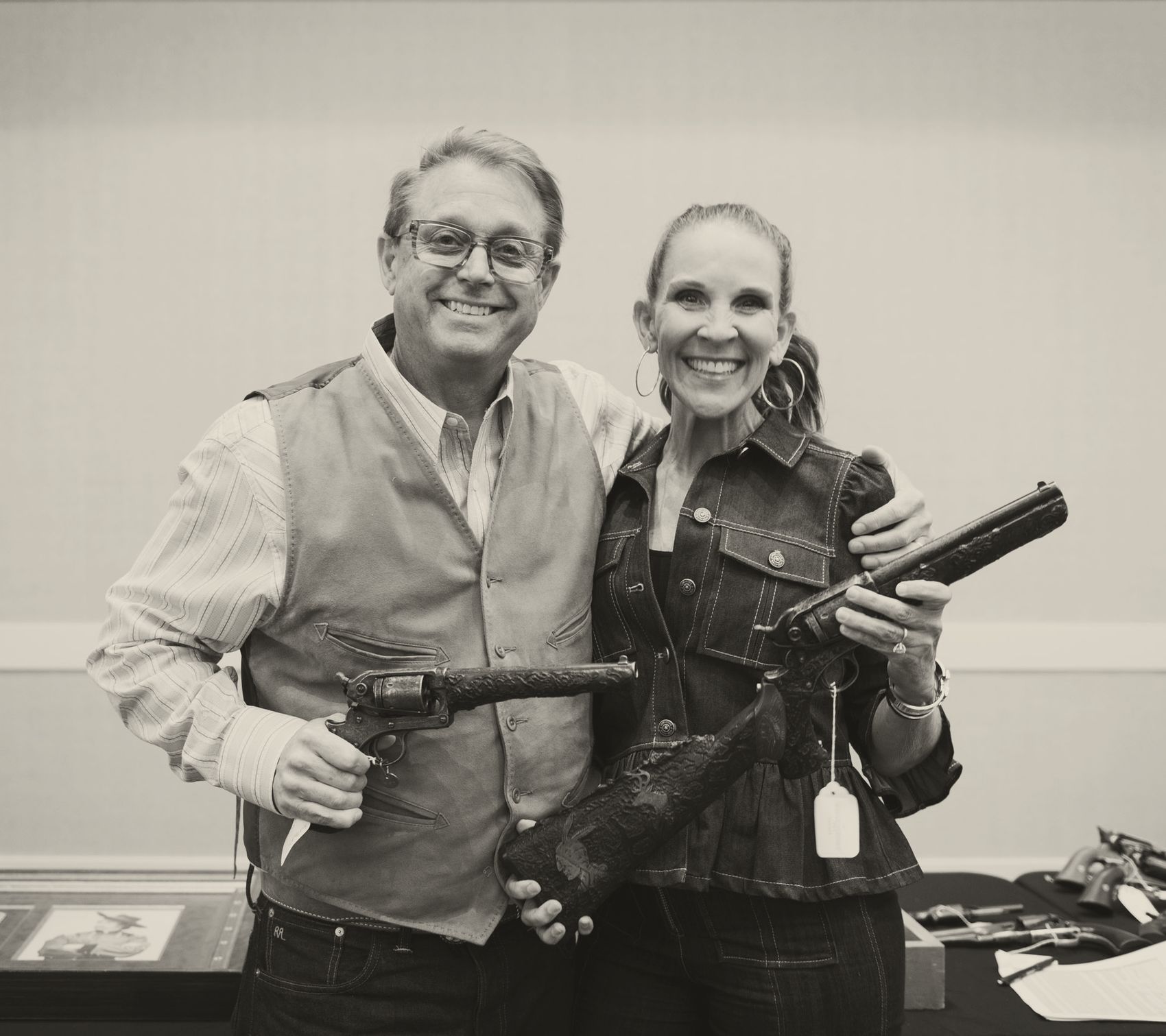
The guns
They began as Starr Model 1863 revolvers, plain cavalry sidearms issued to Union troopers, including the 6th and 7th Michigan Cavalry of Custer’s own “Wolverines.” After the war they were converted to .44 centerfire and turned into something one of a kind: engraved throughout, fitted with forends and a matching carved shoulder stock, and carved deep in the Black Forest style with a chief’s head, a stag, arrows and hunting scenes, inlaid throughout.
Every motif fits the man they are attributed to. Custer was the Boy General of the Civil War, the most famous soldier on the Plains, and an avid big-game hunter who escorted foreign dignitaries on buffalo hunts. The pair comes with a framed display of a Major General’s epaulettes and a clipped Custer signature dated June 6, 1870, reportedly from a Custer descendant.
Above the bar at the Roaring Camp
The Harolds Club gun collection began at the Roaring Camp, Raymond Stagg’s bar on Lake Street in Reno. In 1949 Harolds Club’s Raymond “Pappy” Smith bought the collection whole and put it on show in the casino’s Roaring Camp room, where it was billed as one of the world’s finest displays of antique American firearms, with guns once owned by Jesse James, Buffalo Bill and Wild Bill Hickok. Brian Witherell spotted one of these very revolvers in a vintage photograph of the old Roaring Camp, hanging above the bar.
When the collection went to auction at Butterfield & Butterfield in 1994, the pair sold as lot 3872, catalogued as coming from the personal property of General George A. Custer, with period letters of documentation that have since been lost. It carried a $1,000–1,500 estimate and brought $10,000.
The Custer connection
The pair is believed to have been a presentation to Custer from a Swiss-American heritage group in Michigan, which is why the carving comes from the Black Forest tradition along the Swiss border. The timing fits. The government sold some 20,000 surplus Starr revolvers in late 1870, putting guns like these on the open market just as Custer’s fame peaked, and in the summer of 1871 he was back in Michigan, speaking to veterans in his hometown of Monroe on the Fourth of July. The pair would have reached him on one of his trips east before the Little Bighorn in 1876. After his death, Libby Custer supported herself in part by selling his effects, the likeliest road into collectors’ hands.
Thirty-two years later
On August 24 at Casino Fandango in Carson City, auctioneer John R. “Little John” Gangel opened the pair at $10,000 and called it “iconic American history from the iconic American collection.” Thirty-two bids later the hammer fell at $47,500, nearly twice the high estimate and the top lot of a sale in which all 274 lots sold.
As seen on The Reno You Know
The Reno You Know followed the pair from the Roaring Camp to the rostrum, including the bidding itself. The Harolds Club story starts at 1:47.
From the catalog
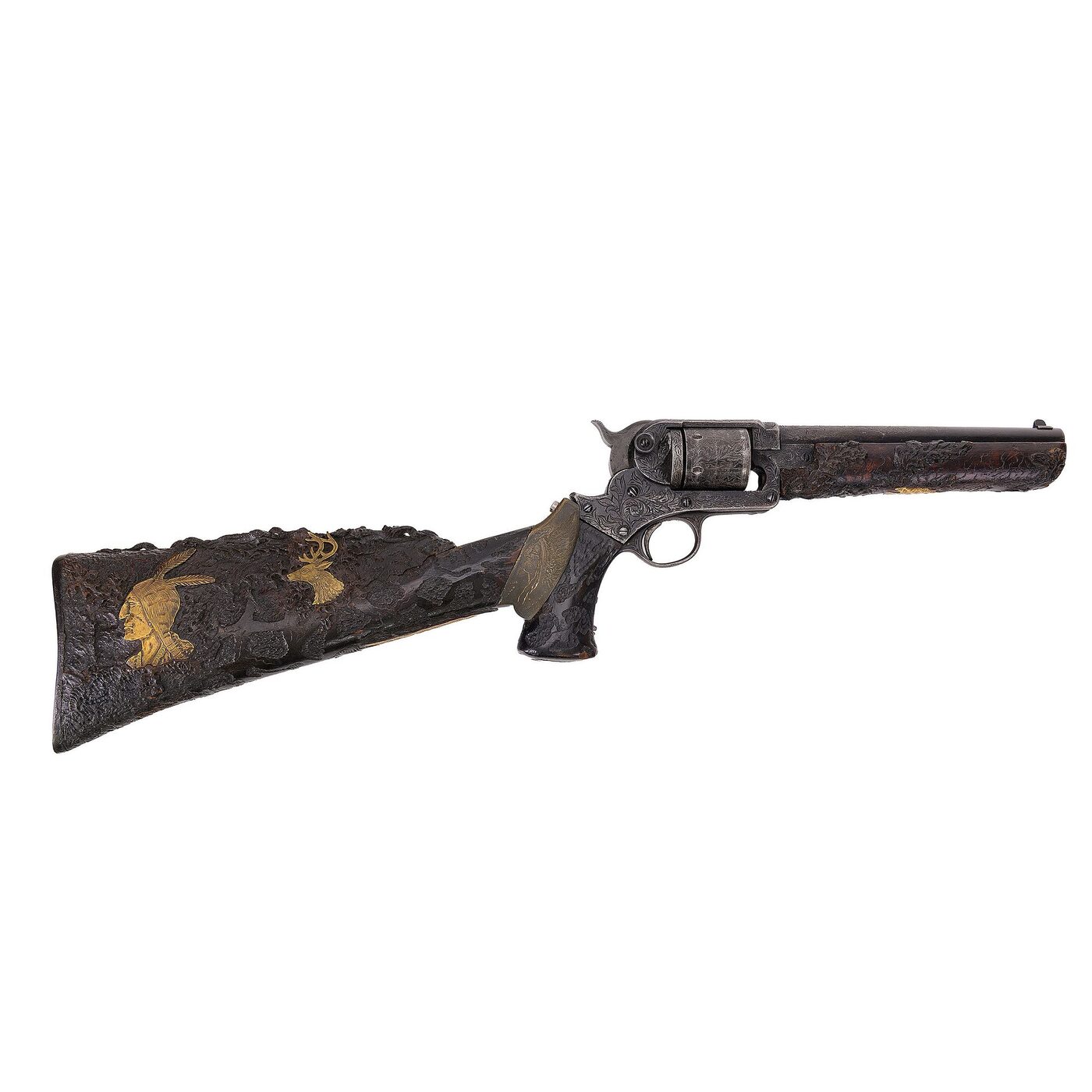
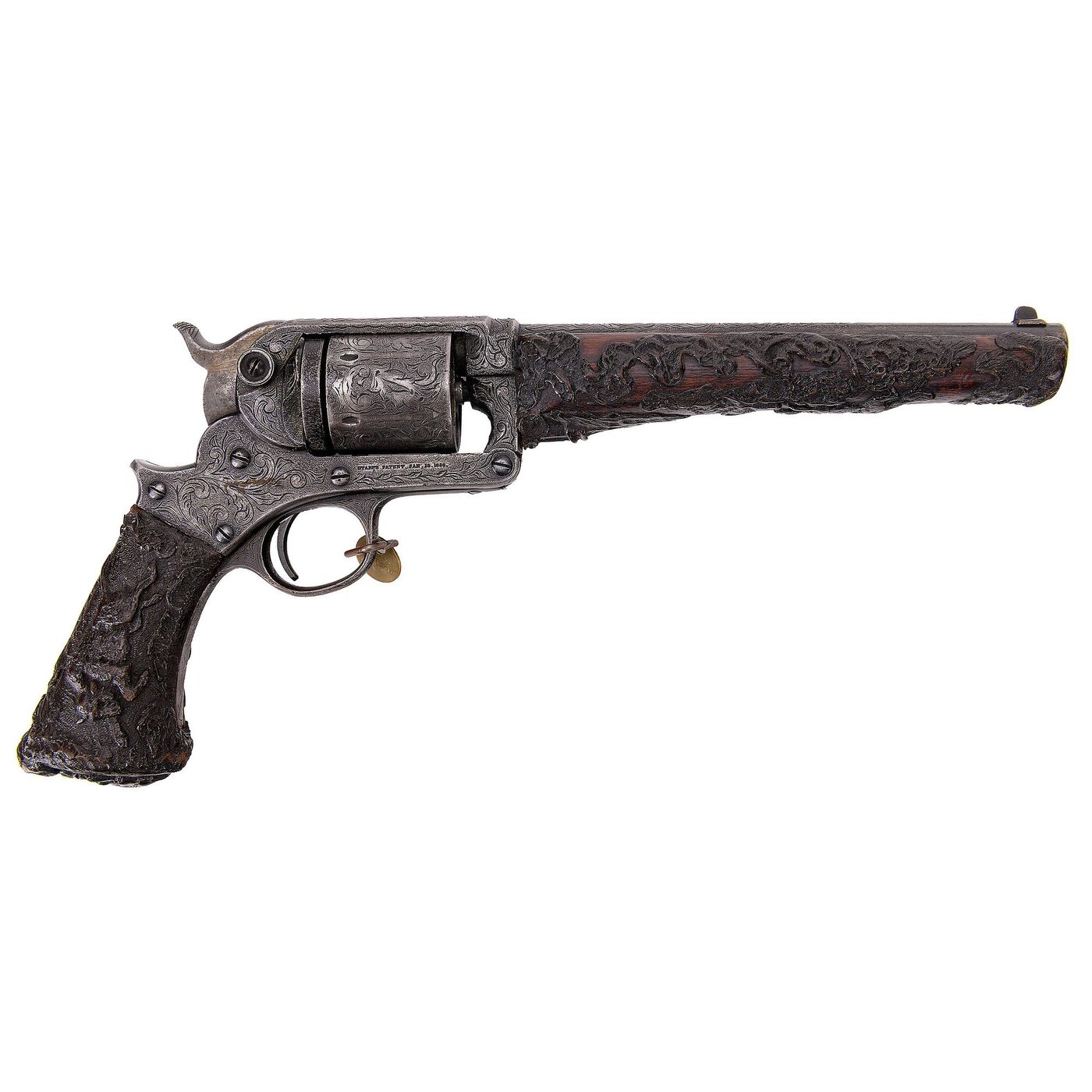
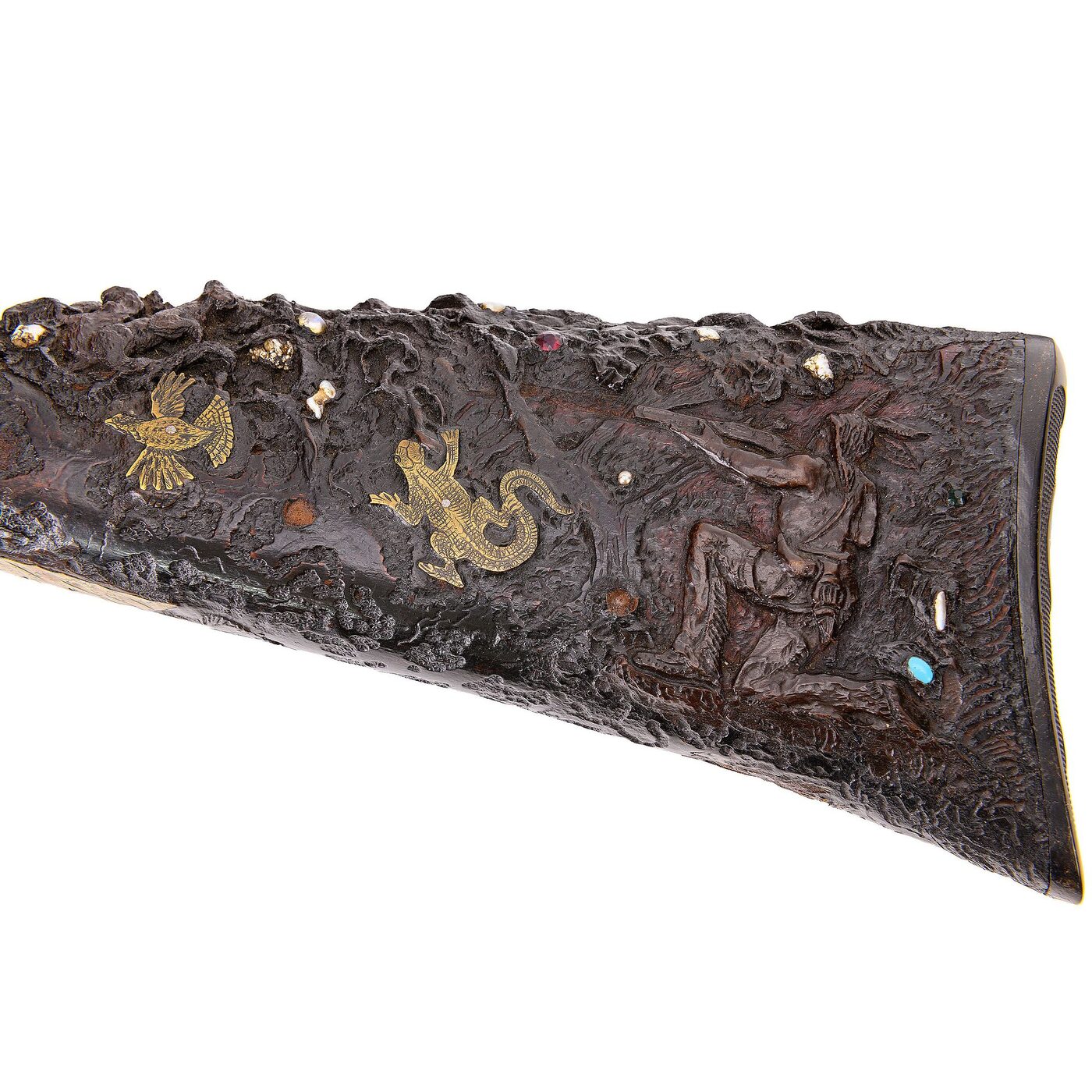
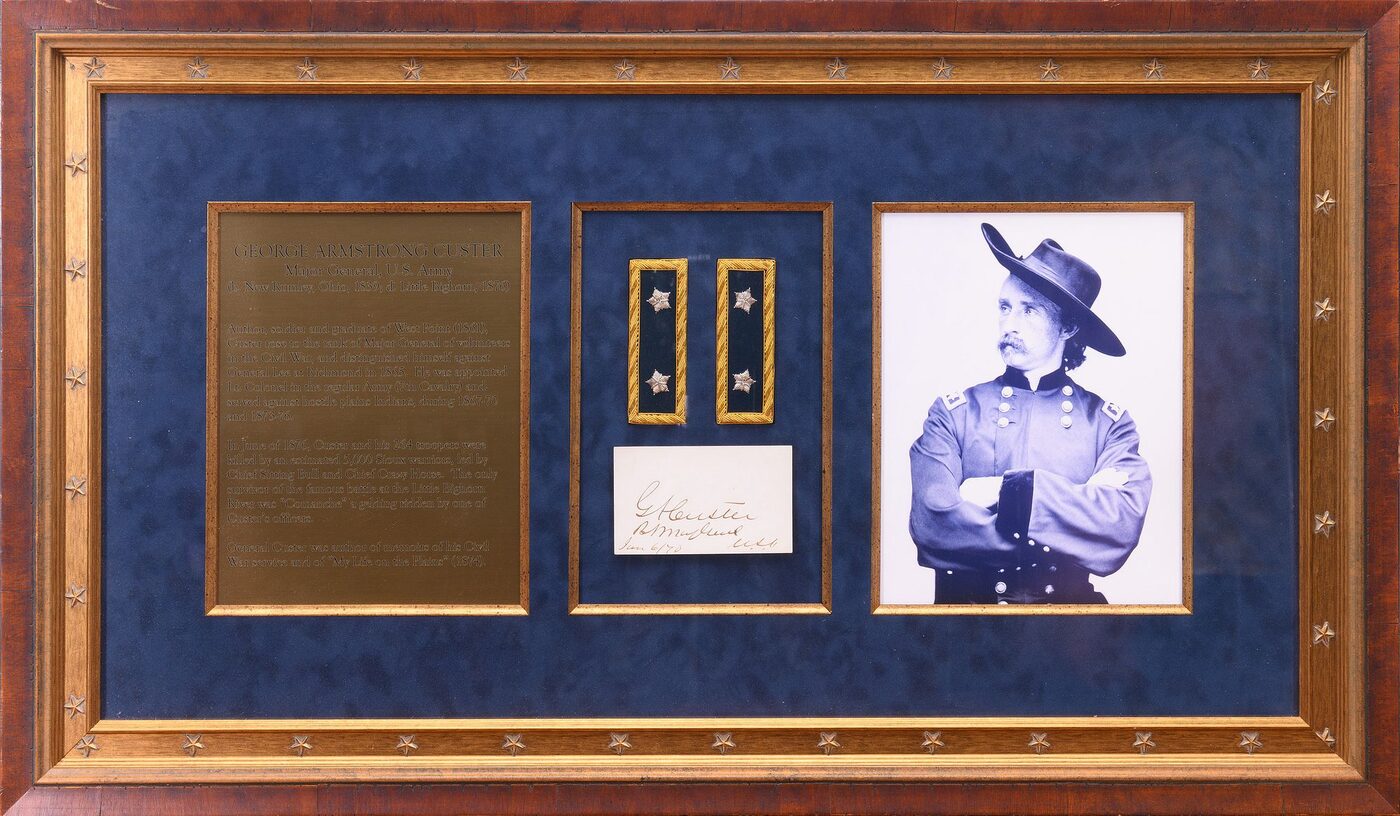
Hammer prices; buyer’s premium not included. Catalog photography by Nevada Gun Auctions.
Have a piece with a story?
The right story finds the right bidders. We research provenance, photograph every lot in house and write our own catalog. Tell us what you have.